
Lessent Delivers Dahua’s Hangzhou Acoustic Laboratory: 50 Hz Acoustics and Automation
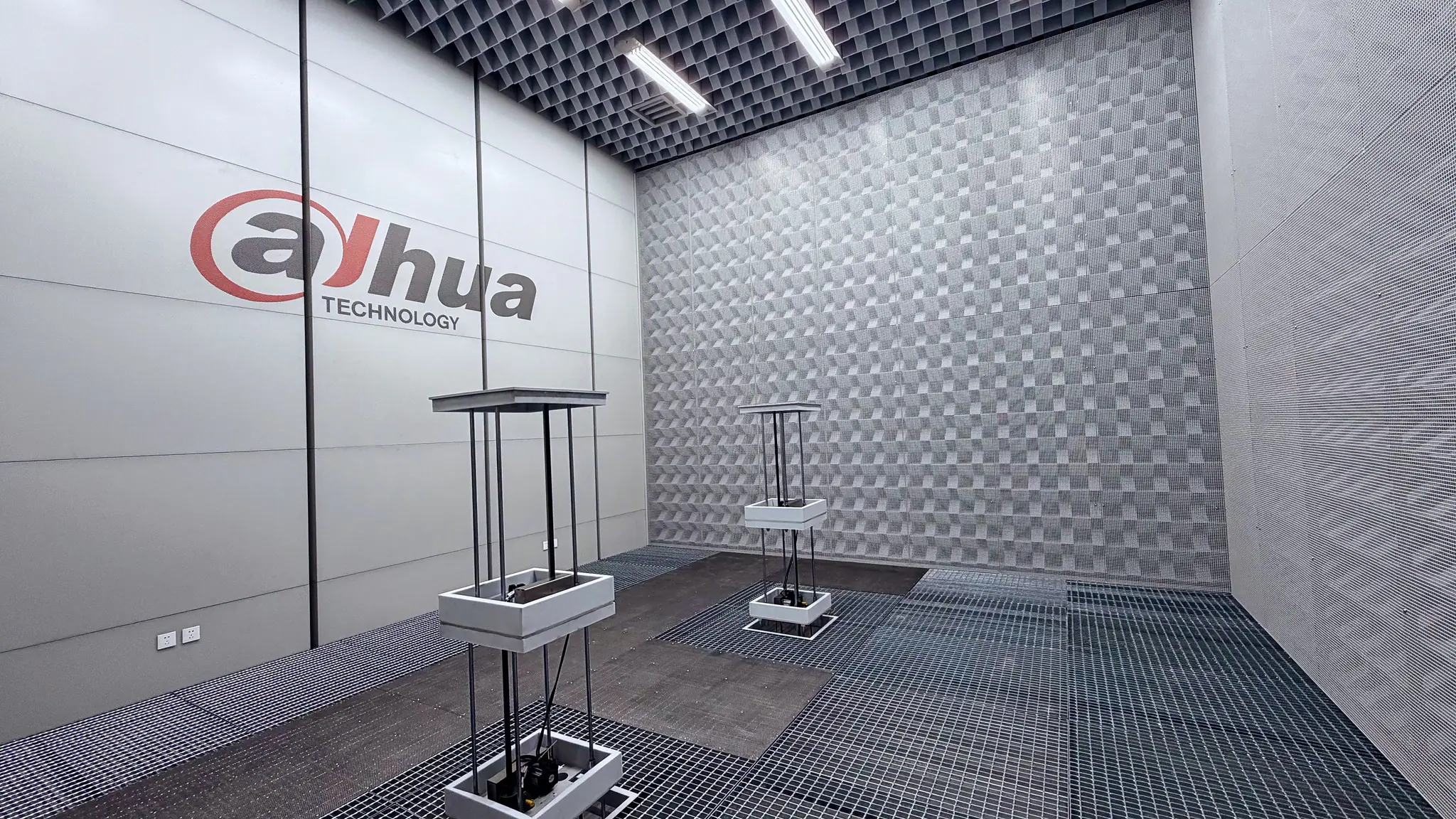
Lessent has completed delivery of an acoustic laboratory for Dahua in Hangzhou, achieving a cut-off frequency of 50 Hz or below and a background noise level below 10 dB(A). The project also includes fully automated lifting platforms. It brings stringent acoustic requirements, calculation and simulation capabilities, and automation provisions into one laboratory solution.
Delivering against demanding acoustic requirements
The project set stringent requirements for the low-frequency acoustic environment, background noise and sound-field deviation. Lessent completed delivery against these requirements, including a cut-off frequency of ≤50 Hz and background noise of <10 dB(A).
For companies planning a similar facility, acoustic specifications should be defined alongside the intended testing tasks. Early discussions need to establish the required performance, test objects, intended use and verification conditions, providing a shared basis for design and subsequent verification at delivery.
Acoustic simulation as part of the design process
Acoustic simulation was an important part of Lessent’s tender proposal. Lessent can provide the theoretical calculation process and simulation results for a 50 Hz free sound field, giving the solution an explainable analytical basis.
From defined acoustic objectives through theoretical calculations and simulation to engineering implementation, Lessent combines design and construction capabilities. For customers comparing proposals, calculations and simulation also help explain the design approach, while on-site measurements verify the actual acoustic environment after construction.
Delivering the acoustic environment and automation together
The project includes fully automated lifting platforms. The site photographs show two platforms, together with the laboratory’s wall and ceiling structures and grated floor. The acoustic space and supporting equipment formed part of the same delivery.
Automation provisions should follow the intended use and be planned alongside the room layout. For similar projects, the planned testing tasks can guide decisions about whether lifting platforms or other provisions are needed and how the equipment relates to the available space.
The Dahua project in Hangzhou is a practical example of Lessent combining acoustic design, calculation and simulation with engineering implementation. From defined requirements to completed delivery, it provides an integrated reference for customers with similar laboratory needs.
Source: Project delivery information confirmed by Tianjin Lessent Technology Co., Ltd., together with site photographs authorised for use.
